
TL;DR
- Half of the hand models launched this year put a motor at every finger joint. Of the new hands we counted, 12 of 25 are built this way in 2026, against 6 of 26 in 2025.
- Figure is betting on a hand that copies ours as closely as possible, so its robots can learn from videos of people. On 22 October its CEO said the hand of its next robot "has more actuators than an entire robot" (an actuator is the motor and gears that move one joint).
- Recordings of people teach a robot hand best when each of its joints can move on its own. In a 2025 simulation study, a four-finger hand with a motor at every joint scored 82 out of 100, against 25 for a five-finger hand whose joints move together.
- Today's hands are strong enough for most chores, but they wear out too fast. A warehouse robot maker says the leading simple hands last 300,000 to 500,000 grasps, which is one to two months of warehouse work.
- The hard part is heat: small motors overheat when they hold a grip. To hold 20 N at a fingertip through a 300:1 gearbox, even a 15 mm Faulhaber motor, bigger than most finger motors, makes four times the heat it can get rid of (our arithmetic).
- China will make most of the world's hands, and the best finger motor is the part of the race still open. Linkerbot alone ships over 4,000 hands a month, while the best small motors still come from maxon (Swiss) and Faulhaber (German).
Everyone who builds humanoid robots agrees that the hand is the hardest part. Elon Musk said in February that "from an electromechanical standpoint, the hand is more difficult than everything else combined", and on Tesla's last earnings call (21 October), its Optimus team called the hand "one of the most challenging hardware areas".
They disagree on how complex a hand should be, and in October two American robot makers showed opposite answers. Boston Dynamics made its new Atlas hand as simple as it could: four fingers instead of five, and 13 joints, each moved by its own copy of the same sealed motor module. That makes the hand cheaper, less likely to break and easy to train in a simulator (Invented in America, built in China explains why Boston Dynamics dropped the fifth finger). Three weeks later, Figure's CEO, Brett Adcock, showed his staff a hand for Figure's next robot that "has more actuators than an entire robot", built to copy a human hand as closely as possible.
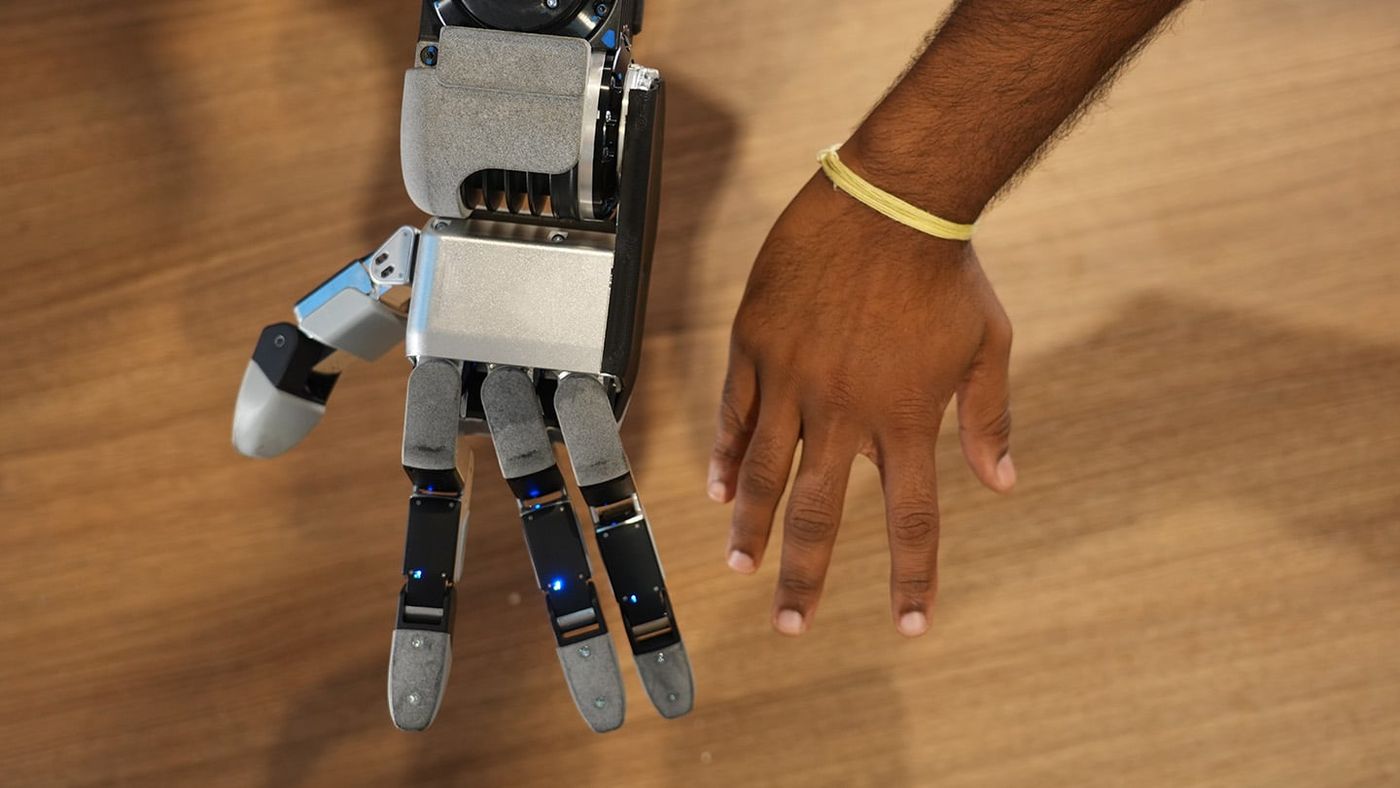
Behind that argument, the two agree on where the motors go: inside the hand, close to the joints they move (Figure hasn't published its new design, but its last two hands worked this way). Most new Chinese hands put a motor at each joint too. Only a few makers, led by Tesla and 1X, still put the motors in the forearm and pull the fingers with tendons (cords), the way our own forearm muscles do. Our view is that this design question is mostly settled, because a motor at each joint suits the two ways robots now learn: the hand behaves the same in a simulator as in real life, and it can copy a person's fingers joint by joint.
If every joint needs its own motor, the motor becomes the bottleneck. A hand needs about 20 of them, each about as thick as a pencil, and they have to hold a grip for minutes without overheating, survive millions of grasps, and cost about $10 each when made by the million. China already makes most of the hands (Huiling's 20-joint hand sells for $1,408) and most of the cheap motors in them. But the best motors, the ones that hold a grip all shift and last for years, still come from Switzerland and Germany, and that's the part of the race still open.
Figure bets that the most human hand will learn the most from people
Figure wants its robots to learn from the biggest source of data there is, videos of people, and Adcock thinks that only works if the robot's hand moves like a person's. At Figure's all-hands meeting (published on 22 October), he described two ways to get data for robots. A company can build special hardware to collect data, and design its robot around that hardware, which makes "the most progress the fastest" but has "the lowest ceiling". Or it can learn from people directly, and then the robot's body and hands must "match human movements and the complexity of humans". Figure chose the second way, which Adcock called "the hardest path", with "a much higher ceiling" (Data is the new gold rush in robotics covers how much human video Figure collects).
Figure came to this hand after trying two others. Its first robot, Figure 1 (designed in 2022), had a tendon hand, and Adcock now calls it "one of the worst decisions we've made to date". Not everyone blames the tendons. Andrea Esposito, who designs tendon hands at Foundation (another humanoid maker), called Figure's failure "a skills issue": by his account, the hand moved only 11 joints, part of the wrist shared the finger motors, and the tendons ran through Bowden tubes (flexible tubes, like a bicycle's brake cables) whose friction frayed them.
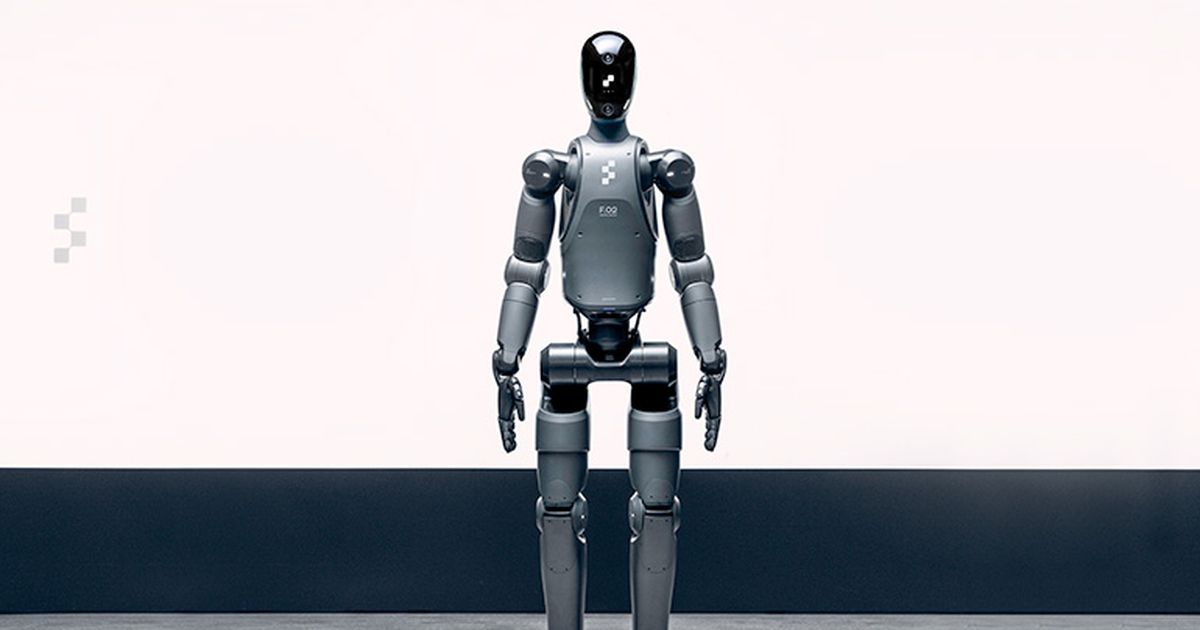
Figure's second design, on Figure 2 (2024) and probably on Figure 3 (2025), is the simple hand that Figure ships today. Figure 2's hand has 16 joints, carries up to 25 kg and moves each finger with one motor unit inside the hand. Figure's patents describe the same layout: one motor per finger drives a worm gear (a screw that turns a gear wheel) and linkages (rods that bend three joints together), and two motors move the thumb, so 6 motors move 16 joints. The patents say this layout "may simplify manufacturing, increase durability, enable the finger assemblies ... to be modular, and may also reduce cost and complexity of control". It works well enough to ship: Figure built its 1,000th Figure 3 this summer.
The Figure 4 hand puts many more motors in the hand, because copying a person needs most of a person's joints. Figure's goal was for the robot's fingertips to follow a human fingertip "at millimeter level precision". Each time the team found something a human hand could do and its hand couldn't, the fix "basically just blew up the entire architecture of the hand", because "The actuators, kinematic layouts, all the electronics, structures, wires, all of it. They're all competing. There's no space." The fourth version of the hand is the one Figure plans to sell, and in October the team was switching it on for the first time. Figure hasn't published how many motors it has, but Adcock left no doubt about the direction: "We're not going to sit here and say we're trying to build wheels because it's less complex and we're building little pinchers and stuff. We're building full human hands."
If "an entire robot" means a Figure body, the hand has perhaps 30 to 40 motors, against 22 for the fingers in Tesla's and 1X's hands and 13 in Atlas's.1This is our reading, and Figure hasn't said. Figure 3 has about 29 actuators outside its hands by our count (Figure has published none), and Adcock describes his robots as "40 plus degrees of freedom". But "a system that is now more complex than an entire robot" could also mean both hands together, which would put each hand at 15 to 20 motors or more. So Figure accepts the most heat in the least space and the most parts to assemble, and in exchange it gets the closest copy of a human hand. Boston Dynamics made the opposite trade.
Dates are when each company showed the hand or published it (Figure 1 is dated by its design year). Figure 2's hand has 16 joints moved by 6 motors; Tesla's 2024 hand had 22 joints with the motors in the forearm; NEO's has 22 joints moved by 44 tendons; the new Atlas hand has 13 joints with identical motors. Figure 4's hand was shown to Figure's staff and isn't on sale yet, and Tesla's and 1X's last dots are their own plans. An open dot is a planned date. Source: Figure, All Hands 2026; The Robot Report; Figure; Electrek; Tesla patent; 1X; Boston Dynamics
Tendons and linkages both lose to a motor at each joint
Tendons copy our own body, and that gives them real strengths. The strongest muscles that bend our fingers sit in the forearm, and long tendons carry their pull across the wrist. A robot hand built this way keeps its motors big and cool in the forearm, and its fingers stay slim and light. Musk gave this reason for Optimus a year ago: "most of the actuators, just like the human hand, the muscles that control your hand are actually primarily in your forearm."
The weak point is the cord, because it wears out much faster than the motors. Francesco Clemente runs Prensilia, an Italian maker of prosthetic and robot hands (it sells hands with and without tendons), and in September he put it simply: "We are talking about thousands of cycles, not really millions of cycles, with the tendons." A tendon rated to hold 150 N (newtons: 10 N is about the weight of 1 kg) "after a few cycles... will hold probably a hundred newtons", and in his experience the trouble is mostly where the cord is anchored to the motor's gearing.
The cord also loses force on its way to the finger, because every pulley and every bend takes a share of the pull. Germany's aerospace centre (DLR) measured up to 30% lost between the motor and the base of a finger, over seven pulleys. In a test from the University of Hong Kong this year, the same finger pushed 33 N with a 10 cm tube, and only 25 N with a 1 m one. That friction also changes with the wrist's angle, so moving the wrist can move the fingers a little (Tesla's patents re-stack the cables inside the wrist to stop this "crosstalk").
The same friction makes a tendon hand hard to simulate, and that matters because robots learn many skills by practising in simulators. MuJoCo, a widely used robot simulator, treats a tendon's friction as fixed, while in a real hand it grows with the pull. When OpenAI trained its Dactyl hand in simulation in 2018, the simulator pushed each joint directly and ignored the tendons. The real tendon hand then reached a median of 13 target positions in a row, against 50 in simulation (the most a test allowed).
Tesla still bets on tendons. Its patents for the next hand describe cords pulled by linear actuators (motors that push and pull in a straight line) in the forearm, for 25 joints per arm (22 in the fingers, 2 in the wrist and 1 at the elbow). Tesla hasn't shown that hand yet, and on its Q3 call Musk said the design changes still happening are "mostly the hand".2Chinese supply-chain reports from late 2025 said Optimus's earlier hands lasted about six weeks in parcel sorting, at over $6,000 each. Their sources are unnamed, and Tesla has never published a hand life or a hand cost. In April, replying to a post about one of Tesla's newly published finger-joint patents, Musk wrote: "We already changed the design. This one didn't actually work."
The best case for tendons is 1X's NEO, because putting the motors in the forearm leaves room for bigger motors, and bigger motors need only small gearboxes. NEO's hand has 22 joints moved by 44 tendons, with gearboxes of "approximately 5:1 to 15:1" (many robot fingers use 100:1 or more). A 5:1 gearbox turns the motor five times for one turn of the joint, so it multiplies the motor's strength by about five. A bigger ratio multiplies it more, but it adds friction, and 1X argues that "at the 100:1 and 200:1 gear ratios common in the field, friction swallows the contact forces before they ever reach the motor" (so the motor can't feel what the finger touches). NEO's fingertip pushes 45 N, among the strongest we found, and 1X says the hand runs "cool enough for continuous operation". It's sealed to IP68 (it can go under water), and 1X's founder, Bernt Børnich, claims 3.5 million cycles at its normal working load.
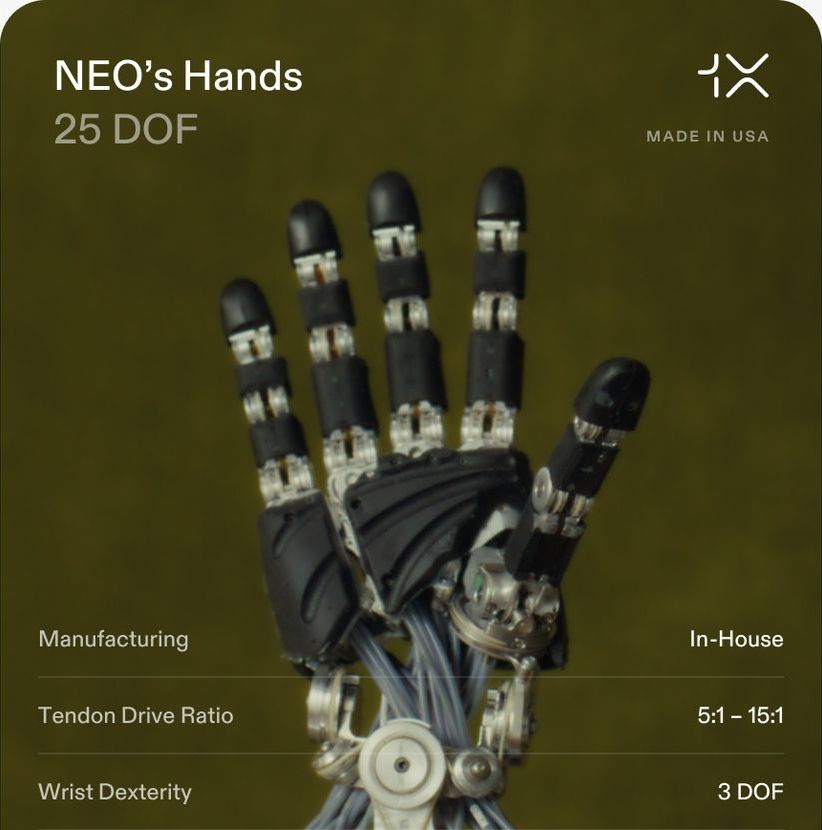
Tendon hands can also be trained in simulation, and their wear can be managed, but both take extra work. Google DeepMind's DemoStart lifted a plug and turned a cube 97% of the time on DEX-EE (a three-finger tendon hand built by Shadow, the British maker of research hands), with no training on the real hand. AgiBot's hand spin-off, AGILINK, sells a tendon hand whose worn parts swap in under 10 minutes, and DEX-EE counts how much each tendon has been used ("tendon odometry") to replace it before it breaks. So tendons work when a maker accepts that its cords are spare parts, and they're still in the race: tendon launches went from 4 in 2025 to 8 in 2026. But more new hands (12 in 2026) avoid the cords altogether, with a motor at each joint.
The third design, linkages and tiny screws, is the cheapest and still sells the most hands, but it can't feel and it can barely move objects. Inspire's best-selling hands use 6 motors for 12 joints. Their screws lock when the power is cut, so the hand holds a grip for almost nothing (about 2 W for the whole hand, less than a phone charger). But a locked screw can't be backdrivenPushed back by an outside force. A joint that can be backdriven gives way when something presses on it, and its motor feels the push.: when something pushes on the finger, the joint can't give way, so the motor never feels the push, and a knock goes straight into the screw's thread. Two joints per finger also move together, so the hand can barely move an object inside it. On MIT's KaRMA test (how far a hand can move a ball around inside itself), Inspire's hand scored about 240 times lower than LEAP, a research hand with a motor at each joint. Partly for these reasons, makers have mostly stopped launching new ones: 12 of the 26 hands launched in 2025, and 3 of the 25 launched in 2026.
This counts models by the year they were launched. By units sold, the cheap 6-motor linkage hands still sell the most. Left out: hands moved by fluids or chains, grippers, and hands whose design isn't public (10 of the 60). A hand that mixes designs is counted by its main one. Source: Our count, from makers' pages, filings and the press, read up to 16 October 2026
Hands moved by fluids or artificial muscles are further away. Sanctuary built a 21-joint hydraulic hand whose valves passed 2 billion cycles, but in June it widened its strategy to running its AI on factories' existing robot arms (The remote-controlled economy covers that move). Clone, whose hands run on water-powered artificial muscles, is redesigning its hand to be easier to simulate and control. And electric artificial muscles (the HASEL kind) moved a prosthetic finger 10 times faster than a motor of the same weight, but with 10 times less force. Our view is that electric motors stay the main way to build hands for the foreseeable future, because motors get the money, the suppliers and the customers.
A motor at every joint learns best, from people and from simulators
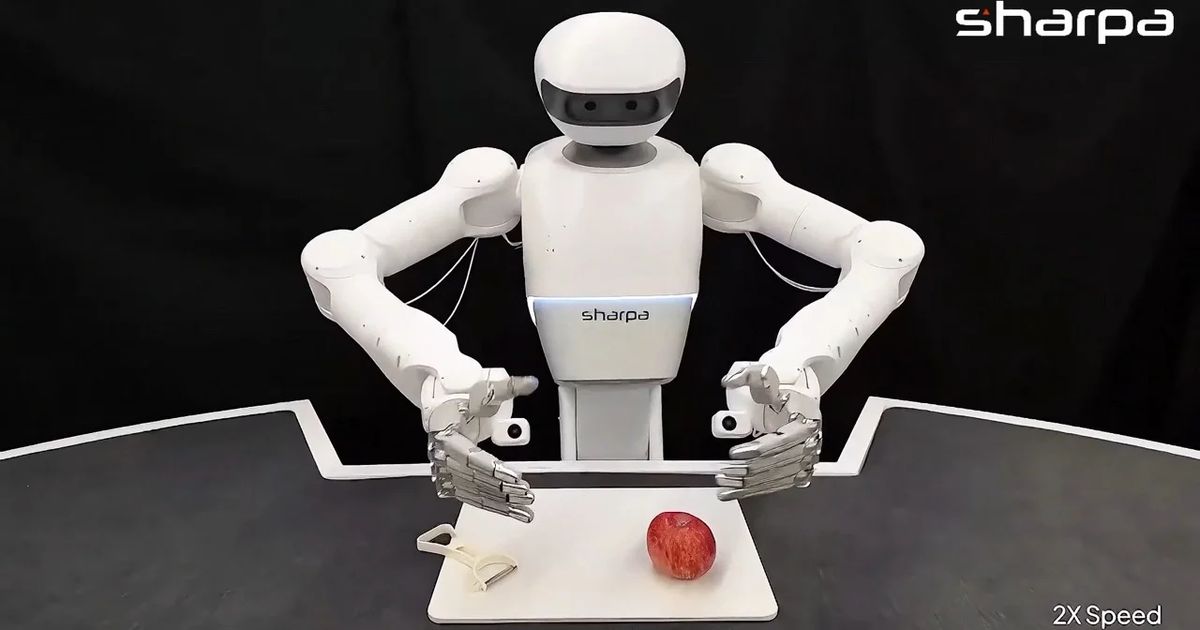
The strongest reason to put a motor at every joint is data: a hand whose every joint moves on its own can take a person's finger movements almost one to one. In February, NVIDIA turned 20,854 hours of video of people into the movements of Sharpa's 22-joint hand (EgoScale), and the robot's success rate on real tasks went from 2% to 56% (Sharpa is a hand maker based in Singapore and Shanghai). Jim Fan, at NVIDIA, explained that "the kinematic similarity lets us simply retarget human finger motion onto dexterous robot hand joints": because the hand is built like ours, a person's finger angles can be copied straight onto the robot's joints. Sunday, which records people with a glove made to match its robot's hand, says the same thing from the other side: "If the robot hand doesn't match the human hand, the data doesn't transfer."
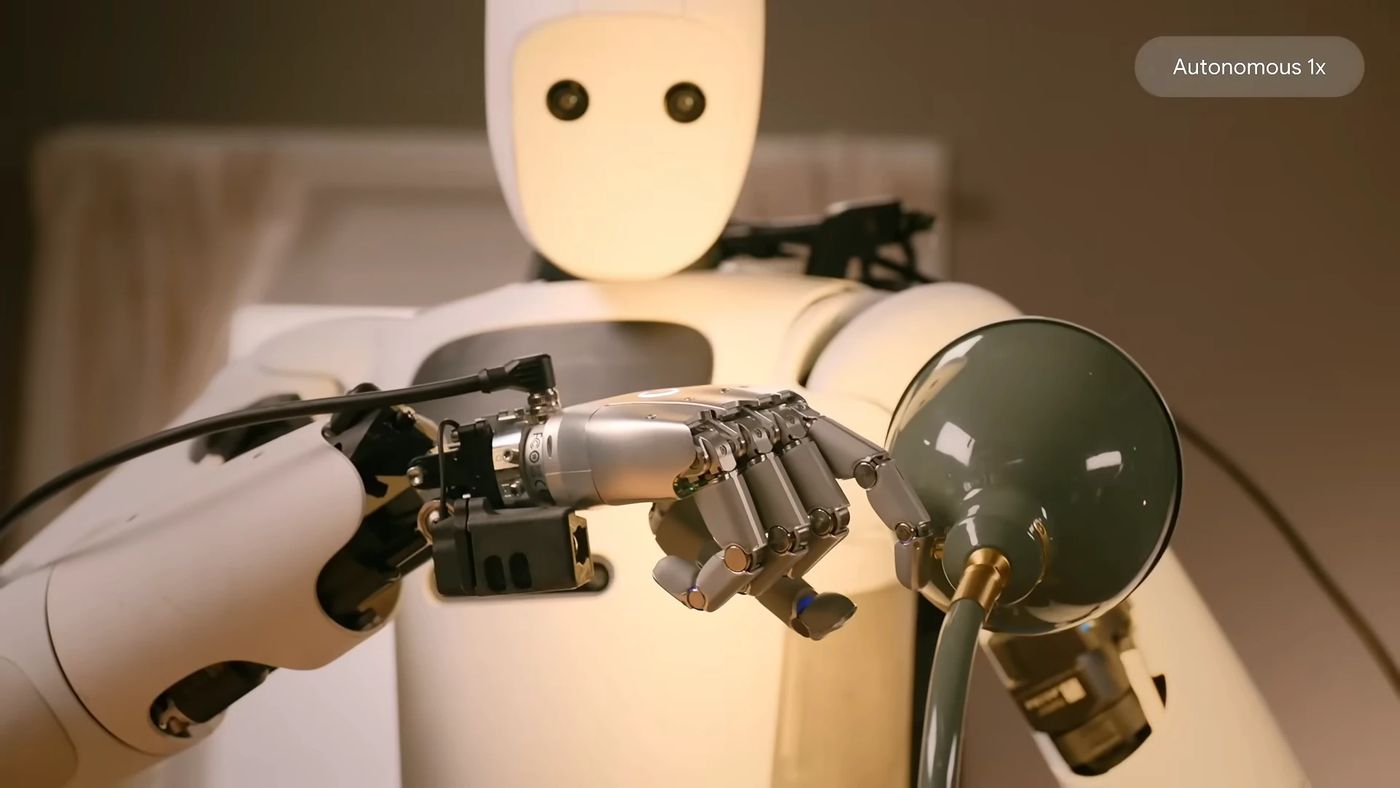
What helps most is the number of joints that move on their own, more than the hand's shape. In DexMachina, a 2025 study where robot hands learned to copy recordings of people doing two-handed tasks (in simulation), the four-finger Allegro hand, with a motor at each of its 16 joints, scored 81.7 out of 100. The five-finger hands whose joints move together scored lowest: Inspire's 47.9 and PSYONIC's Ability hand 24.5. In the authors' words, "Similarity in size is less important than degrees of freedomThe number of separate ways a robot can move, usually one per joint it moves on its own. A human hand has about 20 in the fingers and thumb.". This fits Figure's bet more than it seems: a hand that copies ours has more joints that move on their own, and that's what helps.
Copying alone isn't enough, though, and that's where the simulator comes in. Replaying the people's motion exactly as recorded scored under 15 on every hand tested that way in DexMachina, and it took practice in the simulator (reinforcement learning) to close the gap. In a September study, four hands (two of them versions of one DexRobot hand) went from 0.5-50% success when replaying motion-capture recordings of people to 77-83% after that practice. So a hand also has to simulate well, and that's the second way robots learn.
DexMachina (May 2025): each hand learns to copy recordings of people opening a mixer, a notebook, a ketchup bottle and a waffle iron, by practising in simulation (RL). The score measures how closely the object follows the person's motion. Replaying the people's motion exactly as recorded scored under 15 on every hand tested that way. Values read off the paper's figure. Source: DexMachina, arXiv, 30 May 2025
Hands with a motor at each joint simulate well, because each joint is a simple hinge with a motor. Boston Dynamics says its gearing, which can be pushed back, together with software that cancels the motors' friction, "makes it possible to simulate the hand with high dynamic fidelity" (the simulated hand moves like the real one). Such a joint is easy to model (the LEAP hand's authors say so too), and a cord running over pulleys isn't. The hardest in-hand skills learned so far, like spinning a pen or turning a cube, were learned in simulation, so the hand that simulates best gets the most practice.
Another study shows there's more than one way to learn from video. In ImMimic, what decided how much a robot gained from videos of people was how close its movements were to the person's, whatever its shape, and two simple grippers moved closer to the person than two dexterous hands did. So a hand built joint for joint like ours helps, but a robot whose whole arm and hand move like a person's can learn from video too.
Hands with a motor at each joint can also feel what they touch, and they're easier to repair. A joint that can be backdriven tells the robot how hard it's pushing through its motor's current, with no extra sensor, and the less force it takes to push the joint back, the better the hand feels. UCLA's MIDAS team measured that force (as torque, in newton-metres, N·m): 0.02 N·m on MIDAS and 0.03 to 0.62 N·m on Sharpa's hand, while Wuji's first hand couldn't be pushed back at all (its second can). And when each joint is one module, a broken joint is a part you change in minutes, and a hand line builds 20 copies of the same thing.
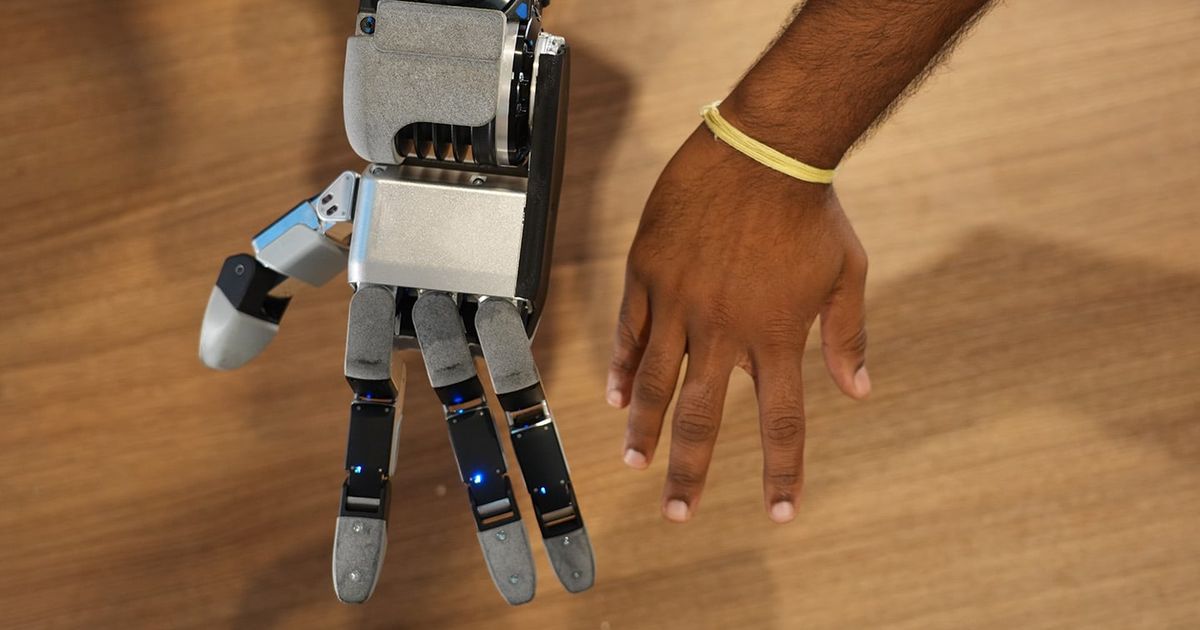
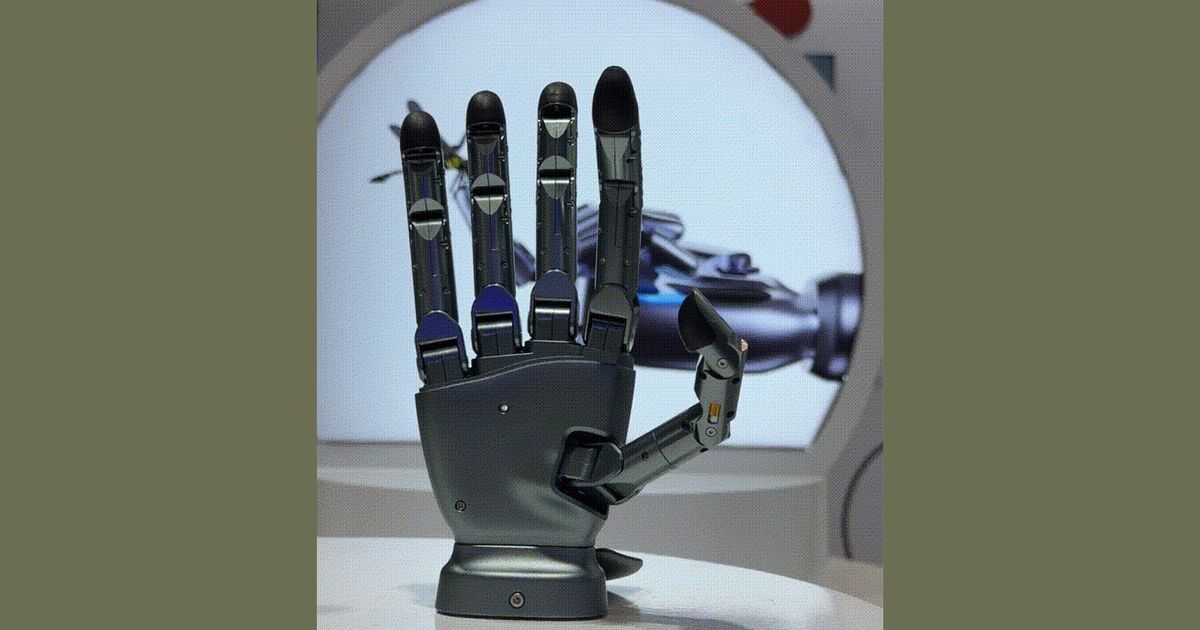
The market is moving this way. Inspire, China's volume leader, added a 22-joint hand with a motor at each joint (30 September) next to its 6-motor hands. Unitree's Dex5-S (22 September) has 22 joints with a motor at each, for RMB 39,900 ($5,620). And Huiling's $1,408 eHand-20 is built the same way.
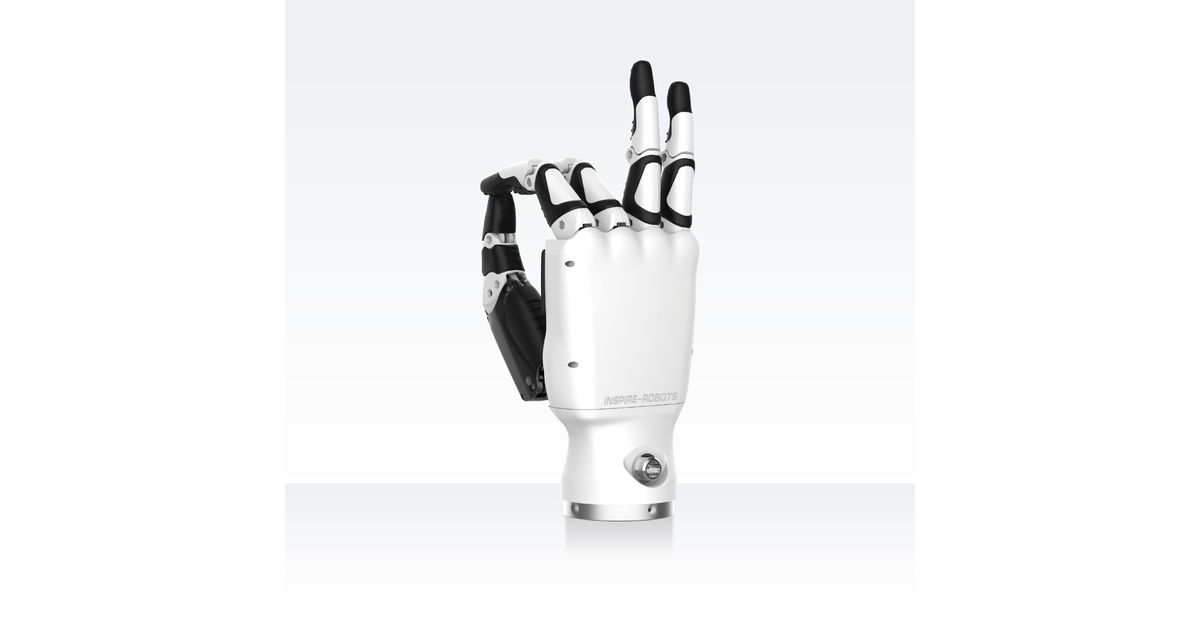
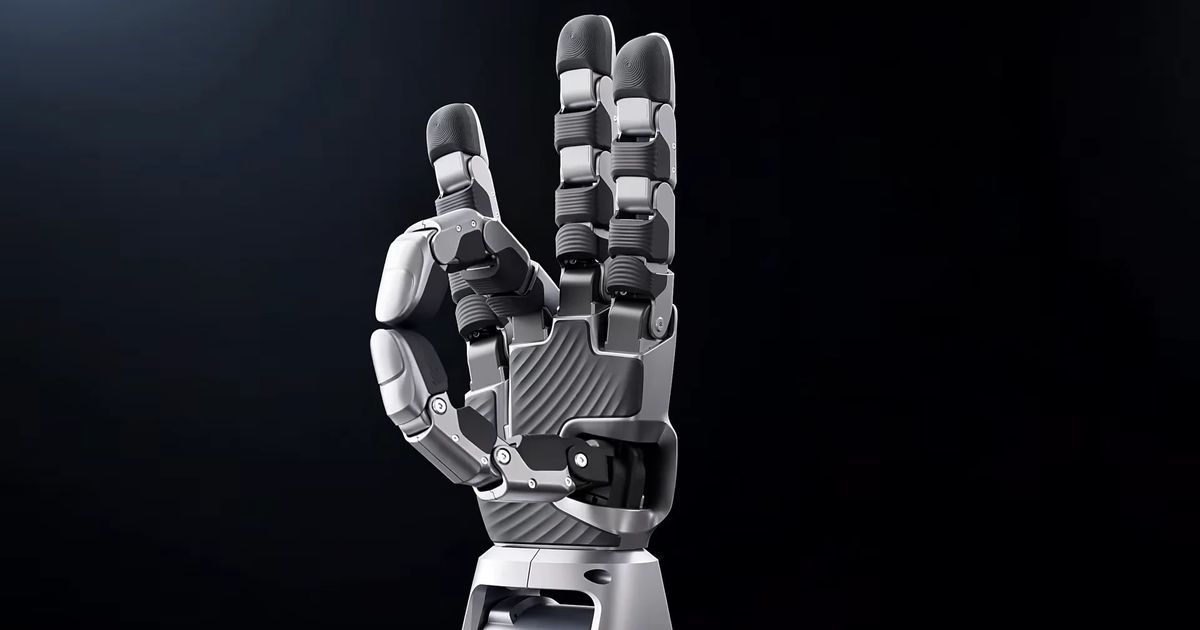
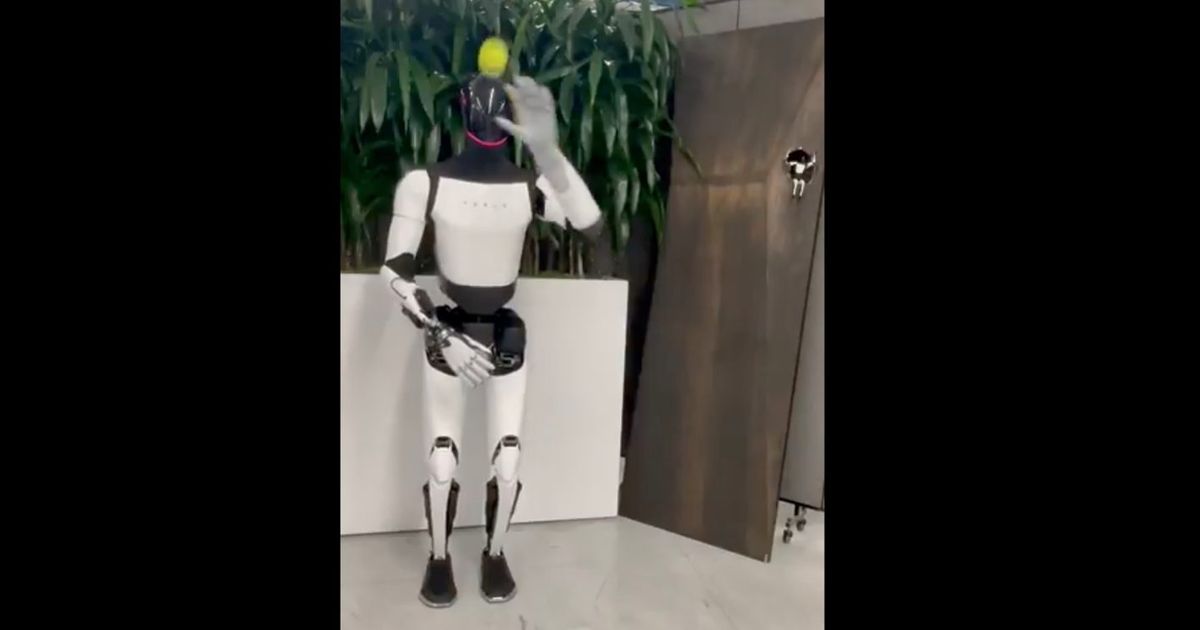
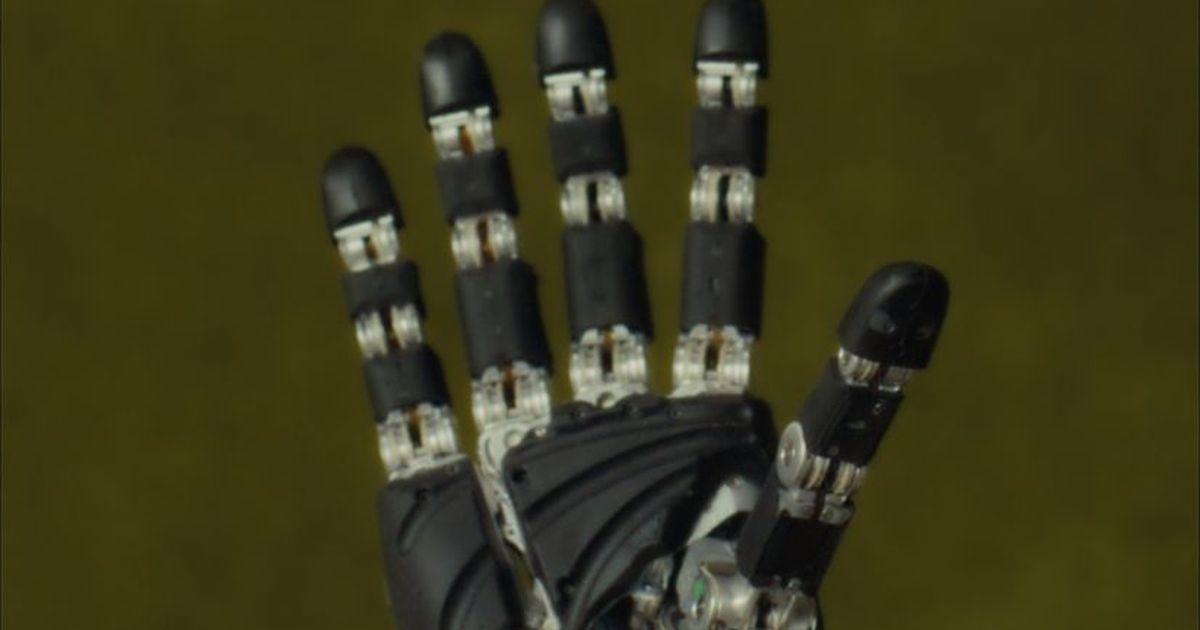

A tendon hand can learn from human video too (NEO's 22 joints all move on their own, and 1X says what NEO learns from human video carries over directly), but it's harder to simulate. This is why, on learning, we're on Boston Dynamics' side: we'd bet first on the hand that simulates well and survives a factory, over the closest copy of a human hand. Figure's hand has the higher ceiling, if its many motors survive the heat and the knocks.
Today's hands are strong enough for most chores, but wear out within months
Robot hands are already strong enough for most chores, because most things people touch were designed for weak hands. Pressing a keyboard key takes 0.45 N, and in a 2004 study of 12 everyday pinch tasks, 9 needed under 10.5 N (pressing a remote button took 1.4 N). US accessibility rules cap the force of public controls (lift buttons, for example) at 22.2 N. A good robot fingertip today pushes 10 to 20 N, and NEO's pushes 45 N.
Only a few tasks need more force than a robot fingertip gives. A 10 to 20 N fingertip can't push in a mains plug (31.4 N, the hardest of the 12 tasks) or squeeze a spray bottle fast (about 62 N). Opening a jar takes 86 to 95 N of squeeze, but that's a job for the whole hand, and Sharpa's hand, one of the strongest compact ones, grips with 150 N. People still have a big margin over all of these: a young woman's key pinch (thumb against the side of the index) is about 78 N, and a 30-year-old man's grip about 500 N.
Where a source gives a range, the bar shows its top. The plug and remote figures come from a 2004 study of 12 pinch tasks (9 of them needed under 10.5 N). The power tool is a factory nutrunner tightening a bolt, and its kick pushes on the hand. Robot figures are makers' claims. Source: Smaby et al., 2004; 2010 ADA Standards; USB connector datasheets; US patent 8,322,630; Yoxall and Rowson, 2015; Radwin et al., 1989; Valero-Cuevas et al., 1998; Mathiowetz norms (1985); Dodds et al., 2014; Sharpa; 1X
For a USB-C plug or a key, the hard part is skill. A USB-C plug needs 5 to 20 N to go in, and a European standard requires a lock to turn with under 1.5 N·m (a real one measured 0.06 N·m or less). What's hard is finding the hole and turning the key inside the hand, and that depends on the robot's brain and on touch (The labs built the robot brain covers where the models stand).
On touch, the sensors are now fine and fast enough, and it's the finger's motor and gears that can't use them yet. A human fingertip feels about 0.7 mN (a mN is a thousandth of a newton). Sharpa's newest hand claims 5 mN, Figure 3's fingertips feel 3 grams (about 29 mN), and Tesla is patenting touch sensors that wrap around the fingers and palm (the drawing at the top of this page). People tighten their grip 60 to 80 milliseconds after an object starts to slip, and Sharpa's touch sensing answers in 20 ms. But because of friction and play (a little looseness) in a finger's gears, the finger can't yet press with steps of force as small as its sensors can feel. The authors of DexUMI, a 2025 study, found that Inspire's and XHand's hands "lack sufficient precision due to backlash and friction" (backlash is that play). On speed, robots are close already: unloaded, Unitree's three-finger Dex3 turns a joint at 1,318° a second, about as fast as a person's fastest finger bend (1,100 to 1,400°).
The biggest gap is endurance: today's hands wear out after weeks or months of real work. In warehouses, a hand grasps 8,000 to 10,000 times a day, according to Geek+ (a Chinese warehouse robot maker), and in July one of its executives said that the leading simple hands (not even the many-joint ones) last 300,000 to 500,000 grasps: "They might break after about a month of use". In the worst case reported, in the same article, Inspire hands broke after about 50 grasps of 5 kg loads in a customer's test (Inspire called it an outlier).
A real job needs millions of grasps. Head cameras on a housekeeper and a machinist counted over 2,000 grasps each in about four hours of work. At one grasp every 10 seconds, one shift a day for five years is 3.6 million grasps, and five years of warehouse work is about 15 million. Among the best claims today are 1 million (Sharpa) and 3.5 million at normal load (1X), and many hands are tested with no load at all, which is Clemente's explanation for other makers' long claimed lives: "Because you can test it at no load." Musk put the bar for the whole robot plainly: "It can't wear out after a month."
A job's needs are our arithmetic: one grasp every 10 seconds over an 8-hour shift, 250 days a year (3.6 million in five years), and 10,000 grasps a day, 300 days a year (15 million). The 50-grasp failure is one customer's test, which Inspire called an outlier. The warehouse robot maker (Geek+) was talking about simple hands with few motors. Makers test at different loads and speeds, and there's no common standard. Source: Yicai, 25 Jul 2026; Wuji; Sharpa; Børnich on X, 1 Mar 2026
Our dates for robots (The labs built the robot brain) tell us what hands must do, and by when. For basic chores in homes robots have never seen (our date is November 2027), a hand needs a 5 to 10 N fingertip and a grip of 30 to 50 N, and it must hold that grip for minutes without overheating. Today's best hands already have that force, so the gap is life and cost. When robots become mostly skilled, with real tools (our date is July 2030), a hand needs 35 to 50 N at the fingertips, 60 to 85 N of key pinch and a 300 N grip, and it must last 3.6 million grasps and cost under $1,500 a pair. On that list, most of today's hands are two to three times too weak and last a few times too short (1X claims to be close on both, from its own tests). As Børnich put it: "If you are a third as strong as a human in your hands, there's a lot of tasks you just can't do."
Small motors overheat when they hold a grip, and the good ones are hard to make
Today's small motors were mostly designed for things like medical pumps and cameras, which run briefly and lightly, and a robot finger asks them to do the opposite: hold a force for minutes, in the place with the least room to cool. Each joint a robot moves on its own needs a full actuator: a motor, a gearbox or a tiny screw to make it stronger, a position sensor (an encoder), a channel of electronics to drive it, and wires that run through moving knuckles. The motor is the part that struggles.
Holding still is the worst case for a motor, because it does no work at all, so all its current becomes heat. And the smaller the motor, the more heat it makes for the same torque. On maxon's datasheets, an 8 mm motor still makes half the continuous torque per kilo of a 32 mm one, so shrinking a motor costs only some of its strength. But it costs a lot of efficiency: on Faulhaber's datasheets, holding the same torque makes about 14 times more heat in a 22 mm motor than in a 32 mm one, about 50 times more in a 15 mm motor, and over 3,000 times more in a 6 mm one. Most finger motors are 6 to 8 mm wide.
Worked out from each Faulhaber datasheet's motor constant (the heat to hold a torque is the torque squared, divided by the constant squared), with the copper coil at 22 °C. The smallest motors also make very little torque: the 6 mm one is rated for 0.15 mNm continuously, against 40 mNm for the 32 mm one (whose rating assumes better cooling and a hotter winding limit). Most finger motors are 6 to 8 mm wide. Source: Faulhaber datasheets (0615 S, 0816 SR, 1319 SR, 1524 SR, 2224 SR, 3242 CR), our arithmetic
A real grip shows how quickly this adds up, even with a motor bigger than most fingers use. To press 20 N with a fingertip 5 cm from its joint, the joint needs a torque of 1 N·m. Faulhaber's 1524 is a 15 mm coreless motor (a light, quick type with no iron in its spinning part, the kind used in fingers). It's rated for 2.8 mNm continuously, and 6.9 mNm at most (a mNm is a thousandth of a N·m). Through a 100:1 gearbox at a typical 60% efficiency, the grip asks it for 16.7 mNm, which is more than it can make at all. Through 300:1, the grip asks for 5.6 mNm, twice its continuous rating. Heat grows with the square of the torque, so that's about four times the heat the motor is built to get rid of, and its winding (the coil of copper wire inside) reaches its limit within about 15 seconds. So a finger that holds a firm grip needs a gearbox of 600:1 or more, or a bigger motor than a finger can fit.
But a bigger gearbox takes away speed, toughness and feel. Each stage (each set of gears) of a tiny gearbox loses about 10% of the power: maxon's 6 mm gearbox is 88% efficient with one stage and 60% with four, and with four stages it has 2 to 3 degrees of play. A high ratio also makes the finger slow, and stiff when something pushes it back. For a finger behind a 300:1 gearbox to give way when it's knocked, its motor would have to spin 300 times faster than the finger moves, and it can't speed up that fast, so the knock lands on the gear teeth and can break them. Tiny lead screws (screws that push a nut along) hold a grip with no power, but they're only about 20% to 38% efficient. And Harmonic Drive's smallest gear needs about twice its rated torque to be turned backwards, so it barely backdrives at all. In other words, the gearing that saves a finger motor from overheating also takes away its feel.
The people who build hands see this every day. UCLA's MIDAS research hand lifted 1.2 kg with one finger, and "The actuator overheated shortly after lifting this load". In its authors' words, "payload is bounded by actuator thermal limits rather than structural strength". In a test of repeated grasping, the Allegro hand (a research hand used for years) "begins to fail" after 15 minutes, from overheating. Wuji's first hand ran hot and came back for repairs often, according to the Chinese tech press (its second stays under 50 °C). Tesollo, a Korean maker, rates its finger joints at 0.4 N·m continuously against 2 N·m at most, and its CEO warns that "Even if the maximum joint torque is high, it may not be sustainable for an extended period." Clemente again: "sometimes you have to stop using the device in order to wait for the device to cool".
These motors also wear out, and the good ones are hard to make, which keeps them expensive. Many small coreless motorsSmall motors with no iron in the spinning part. They're light, fast and efficient, so they're used to move fingers. Maxon and Faulhaber lead. have brushes (the sliding contacts that feed current to the coil), which last about 1,000 to 3,000 hours according to maxon, against about 10,000 to 20,000 for brushless ones. Brushes wear while the motor turns, so a brushed finger motor that turned through a whole shift every day would last six months to a year and a half. Making them is hard too: their coil holds itself together with no iron core to wind it on, and the machines that wind the best ones come from Europe, the US and Japan. At Leadshine's stand at a robot fair in August, staff said the yield of coreless motors (the share that pass testing) "may be only 40-50%". An imported 6-8 mm coreless motor costs $50 to $80 in volume, and a Chinese one 30-40% of that (maxon's list price for a single 8 mm motor is €84 to €113). Their materials cost under $2 (our estimate: a 3 g magnet and a few grams of copper), so most of the price pays for know-how and for the motors that fail testing.
The fixes for hot, short-lived finger motors are already being built
Makers are attacking the heat and the wear from five sides at once.
- Bigger motors where the hand allows it. Berkeley's QUAD hand (September) drives its two outer fingers with one larger shared motor, and measured up to 96 times less heat when holding a load. That goes against a motor at every joint, so it fits the fingers that need it least (Boston Dynamics dropped the little finger altogether). Origami Robotics, a hand startup, cut its gearing "from 288:1 to 15:1 using axial flux motors and thermal optimization" (axial-flux motors are flat, so they fit more torque into a thin space).
- Brushless motors with more copper. Brushless motors last several times longer, and more copper means less heat for the same torque. Zhaowei already mass-produces a 4 mm brushless coreless motor, and is developing versions for hands. Hamm, a motor unit of the Chinese company Weihong, says its hand modules stop coreless motors from "burning out from stall heat". And a team at Carnegie Mellon, with a motor maker from Suzhou, built a 19 mm motor with a record 45% copper fill (the share of the winding space that is copper).
- Holding a grip for free. Screws that lock already do this (Inspire's best-sellers, and Zhaowei's small screw drives). Clutches held by static electricity can hold a joint with very little power, but a Texas A&M team says they still "wear out and fail too quickly".
- Getting the heat out. A metal mount lets the same Faulhaber motor shed 6.3 W instead of 2.4 W, so it can hold about 1.6 times more torque (our arithmetic, from its datasheet). DexRobot's research hand stays at a steady 65 °C over 24 hours with a small fan. Mimic, a Swiss hand startup, blows air through its forearm, and Xiaomi's robot forearm "sweats" half a millilitre of water a minute to remove about 10 W. We found no hand with liquid-cooled finger motors yet.
- Proving the life, and swapping what wears. There's no standard test for a robot hand's life, and in China 10,000 uses is an informal pass line. Meanwhile, makers design for repair: a DEX-EE finger comes off with six screws and one connector, UCLA swaps a MIDAS finger in under 15 minutes, and each of Atlas's 13 joints is one sealed module.
We also make two forecasts of our own. By November 2027, when robots do basic chores in unseen homes, at least one hand maker publishes a life test of over a million grasps at a load stated in kilograms, because no buyer will put a hand in a home or a warehouse on a test with no load. And by the end of 2028, a Chinese maker sells a brushless finger motor rated for 10,000 hours, for under $15 in volume. Chinese hands already use brushless motors (Wuji's and Linkerbot's, for example), Chinese motors already cost about a third of imported ones, and brushless motors last 10,000 to 20,000 hours, so what's left is proving the life.
Hand motors must go from millions to billions by 2033
Hand motors are a small market today, and on our forecast they must grow faster than almost any other part of a robot. Many humanoids still ship with no dexterous hand at all: Unitree fitted dexterous hands to 27% of the humanoids it sold in the first nine months of 2025, and Inspire's marketing chief said in April that fewer than 2,000 of the roughly 5,000 humanoids out there had them. A typical humanoid today has about 13 hand motors, against about 29 in its body (our count). But a robot with full hands carries as many motors in its hands as in its body, or more: Optimus V3 and NEO each have 44 hand motors, 22 per hand.
The supply is enough for 2027 only if every announced line gets built, and the gap opens from 2028. On our forecast (150,000 robots built in 2027 and 100 million a year by 2033), the world needs about 3.5 million hand motors in 2027, 11.5 million in 2028 and 4.8 billion in 2033, counting the hands that wear out and get replaced. The hand lines with firm plans can take about 1.3 million motors in 2027 and 1.5 million in 2028, or 3.8 million and 4.3 million if every announced line is built. (We count hand-assembly lines times their motors per hand, so a motor maker's own plans don't show here.) So output has to double about every seven months. The 2033 number is about 175 times what Zhaowei, one of China's largest makers of small motors and gearboxes, sold in 2025 (27.5 million micro-drive units, for phones, cars and everything else). And if other makers follow Figure to 30 or 40 motors per hand, the 2033 need grows by 50% to 100%.
Hatched bars are our estimates. Needed: our robot forecast (150,000 robots in 2027, 400,000 in 2028, 2 million in 2030, 100 million in 2033), about 15 hand motors per robot in 2026 rising to 40 from 2032 (some robots ship with grippers), plus the hands that wear out and get replaced, which is the least certain part. Hand lines: the hand-assembly lines with a published capacity (Linkerbot, OYMotion, Xynova, Figure, 1X and Leadshine), times their motors per hand. Makers that don't publish a capacity (like Inspire, Unitree and AGILINK) and motor makers' own plans aren't counted, and the motors per hand change each year, which is why firm capacity dips in 2027. Source: Our estimates, from company filings, investor records and makers' announcements
Almost all of the new capacity for these parts is being built in China. Hamm shipped over 50,000 hand joint motors in the first half of 2026, and plans 80,000 a month by the end of the year. Zhijian Zhiqing, which makes flat 16 mm joint modules and gets 60-70% of its revenue from hand makers, planned capacity for 200,000 a year by the third quarter. For the tiny screws that turn a motor's spin into a strong, precise push (Inspire's fingers work this way), Nuoshi, the main supplier of these screw drives to Linkerbot, makes a roller screw 1.5 mm thick and aims to go from 3 million a year to 10 million by the end of 2026. Wuzhou, a maker of car steering screws, plans 2.1 million tiny ball screwsA screw and nut with small balls rolling between them. Efficient and precise, but they handle shocks less well than roller screws. a year by about mid-2028. The demand that will test all of this comes soon: Tesla plans its first Optimus deliveries to other companies around the end of 2027, and 1X aims to build 100,000 NEOs a year by then (about 200,000 hands).
China will make most of the hands, and the best finger motor is still up for grabs
Chinese makers already ship most of the world's hands, and our view is that they'll make most of them, the way they make most robot joints. Linkerbot (a Beijing hand maker) made over 4,000 in one month this spring, and is building a line for about 100,000 a year. Inspire delivered over 10,000 in 2025, well above its team's most optimistic forecast of about 4,000. It aims for 30,000 to 50,000 this year, and claims over 60% of the world market. AGILINK has shipped over 15,000 hands since its spin-off in January, OYMotion took orders for over 10,000 in the first half of the year, and BrainCo has made about 13,000 in total. These are the companies' own figures, and together they add up to more than market research counts (GGII counted 19,200 hands sold in China in all of 2025), so read them as capacity and ambition more than sales. The money is following them: hand makers and their part suppliers raised about $1 billion in named rounds this year to mid-October, against about $195 million in 2025 (our tally).
The West builds its own hands, inside its robot makers. 1X can make 10,000 hands this year (with tendons, in California). Figure's factory is sized for up to 24,000 a year (for 12,000 robots), and Boston Dynamics is working out how to make 100,000 a year. Tesla, which also builds the hands for its own robots, went from a few dozen robots a week in the second quarter to several hundred in August, according to The Information. The Western companies that sell hands to others are mostly small: Shadow has about 200 hands in use, mostly in research labs.
The best finger motors are where the West still leads, and where the race is still open. Maxon and Faulhaber make the best coreless motors: DEX-EE runs on 15 maxon motors, and maxon says its orders (robots among them) have "risen significantly" since early 2026, so it's adding capacity. China is scaling the cheaper end. Moons' is reported to supply Optimus's coreless motors (in a Chinese investor post, and neither company has confirmed it), and it's building a line in Vietnam for buyers in North America. The US has almost no maker of small motors for robot hands, and that matters, because US rules since July block new foreign-made robots and favour robots with US-made parts.
Bet by bet, here's our view:
- A motor at each joint, about 20 per hand, sold to everyone (China's hand makers, like Inspire, Unitree, AGILINK, Huiling and Wuji, and Sharpa). For this to work, finger motors must hold a grip without overheating, and makers must publish a real life test. Our view is that this bet wins the volume and sets the price for everyone.
- Fewer motors, all the same, trained in simulation (Boston Dynamics). For this to work, 13 sealed modules must survive factory work, and practice in simulation must make up for the missing finger. Our view is that this becomes the first Western hand that is reliable at scale.
- The most motors, to learn from videos of people (Figure). For this to work, perhaps 30 to 40 small motors must fit in a human-size hand without overheating or breaking. Our view is that this has the highest ceiling and the hardest build, and the Figure 4 hand in real work is its first test.
- Tendons from the forearm (Tesla and 1X). For this to work, the cords must last years and be cheap to replace. Our view is that tendons stay in a few big Western robots, but don't become the industry's design, because the cords wear out and are hard to simulate.
- The best small motor inside every hand (maxon and Faulhaber, against Moons', Zhaowei, Hamm and other Chinese makers). For this to work, a brushless finger motor must last years of shifts and cost about $10. Our view is that China already wins on price, and reaches the long-life end by the end of 2028 (our forecast above).
So who will win? China's hand makers win the volume. Boston Dynamics and Figure are the West's two bets, one on reliability and one on the highest ceiling. And the finger motor inside every hand is the race still open, between Swiss and German quality and Chinese price.
Sources
TL;DR and opening
- Our own count, no single link: 68 hands by launch year and design, from makers' pages, filings and the press, read up to 16 October 2026 (the designs chart shows 50 of the 60 launched in 2024-26).
- Musk on the hand, 5 Feb 2026: Dwarkesh Patel, transcript; Tesla's Q3 call, 21 Oct 2026: transcript
- Atlas's new hand, 4 fingers and 13 joints, one actuator type, and why it has no fifth finger: Boston Dynamics, "Robot hands for modern AI and real work", 1 Oct 2026; The Robot Report, 9 Oct 2026
- Figure 4's hand, "more actuators than an entire robot": Figure, All Hands 2026, 22 Oct 2026 (at 16:22 to 21:53)
- Huiling's $1,408 eHand-20: iFeng, 12 Oct 2026; tendon hands at 1X: 1X, "NEO's hands", 9 Jul 2026; at Tesla: Tesla, patent CN122206537A
- The header drawing: Tesla's patent application for touch sensors on robot hands, via @SawyerMerritt on X, 8 Oct 2026
- Photos: Atlas's hand, Boston Dynamics; NEO's hand card, 1X; Apollo with Sharpa hands, Humanoids Daily; the slide row's photos from Inspire, The Robot Report (Figure 2), iFeng (Huiling), Humanoids Daily (Sharpa and Unitree), Electrek (Tesla's 2024 hand), 1X and Figure.
- The timeline of the four American makers' hands: the sources here and in the next two sections.
- Our own estimate, no link: about $10 a motor when made by the million (a motor at $10-15 at a million hands a year), from supplier prices and our cost model.
Figure bets that the most human hand will learn the most from people
- The two ways to get data, "the most progress the fastest", "the lowest ceiling", "match human movements and the complexity of humans", "the hardest path", "a much higher ceiling": Figure, All Hands 2026 (at 17:42 to 20:00)
- The tendon hand, "one of the worst decisions we've made to date": same video (at 11:29); Esposito's "skills issue", and Figure 1's 11 joints, shared wrist and Bowden tubes by his account: Humanoids Daily, 14 Aug 2026
- Figure 2's hand, 16 joints, 25 kg, one motor unit per finger: The Robot Report, 6 Aug 2024; one motor and a worm gear per finger, and the reasons quoted: Figure, patent US20250375898A1; six actuators for 16 joints inside the hand, two for the thumb: Figure, patent US20260102926A1. Reading these as the Figure 3 hand is ours. The 1,000th Figure 3: All Hands 2026 (at 14:10)
- Millimetre fingertip tracking, "blew up the entire architecture", "There's no space", the fourth version to market, "We're building full human hands", "40 plus degrees of freedom": same video (at 20:00 to 21:53, 58:12 and 05:25)
Tendons and linkages both lose to a motor at each joint
- Launches by design: our count (chart note). Musk on forearm muscles: Tesla, Q3 2025 call transcript, 22 Oct 2025
- Clemente's "thousands of cycles", 150 N to about 100 N, anchors, the cooling pauses and "test it at no load": Core Matter, "The hand that wouldn't quit", 4 Sep 2026
- Up to 30% friction loss over seven pulleys: DLR, Humanoids 2015; 33 N against 25 N with a longer tube: MM-Hand, University of Hong Kong, arXiv, 19 Apr 2026; the wrist "crosstalk": Tesla, patent WO2026080687A1
- MuJoCo's load-independent tendon friction: MuJoCo documentation, computation; Dactyl's simulator pushing the joints directly, and 13 against 50: OpenAI, arXiv, 2018
- 25 joints per arm, tendons pulled by forearm linear actuators: Tesla, patent CN122206537A; Musk's "mostly the hand": Tesla, Q3 2026 call transcript, 21 Oct 2026; the footnote's six weeks and $6,000: 36Kr, 16 Jul 2026, relaying LatePost via ITHome, 24 Oct 2025; "We already changed the design": Musk on X, 19 Apr 2026
- NEO's 22 joints, "approximately 5:1 to 15:1", 45 N, IP68, "cool enough", "friction swallows the contact forces": 1X, 9 Jul 2026; 44 tendons and 3.5 million cycles: Børnich on X, 1 Mar 2026
- DemoStart, 97% on DEX-EE: Google DeepMind, arXiv, 2024; tendon odometry: Shadow, DEX-EE technical specification; AGILINK's 10-minute swap: Humanoids Daily, 20 May 2026
- Inspire's 6 motors for 12 joints, self-locking and its standing current: Inspire, RH56DFX; KaRMA scores (Inspire 0.0004, LEAP 0.097): MIT, arXiv, Sep 2026
- Sanctuary's valves: Sanctuary, Dec 2024 and its wider strategy: RunTimeWire, 29 Aug 2026; Clone's redesign: Interesting Engineering, 2 Oct 2026 and its water-powered muscles: Clone; HASEL against a motor: Yoder et al., Frontiers in Robotics and AI, 27 Nov 2020
A motor at every joint learns best, from people and from simulators
- EgoScale, 20,854 hours, 2% to 56%: NVIDIA, arXiv, 18 Feb 2026; Jim Fan: X, 25 Feb 2026; Sunday: Sunday, 19 Nov 2025; 1X on human video: 1X, 12 Jan 2026
- DexMachina: arXiv, 30 May 2025; four hands from replay to 77-83% with RLReinforcement learning: the robot learns by trial and error, trying to get a better score.: arXiv, 21 Sep 2026; ImMimic: arXiv, 13 Sep 2025
- Boston Dynamics on simulating its hand: Boston Dynamics, 1 Oct 2026; LEAP's hinge joints: LEAP Hand, RSS 2023; backdrive torques measured on MIDAS, Sharpa and Wuji: UCLA, arXiv, 16 Jul 2026; Wuji Hand 2 can be backdriven: Wuji
- Inspire's 22-joint hand: 10jqka, 30 Sep 2026; Unitree's Dex5-S: Unitree, Sina, 22 Sep 2026
Today's hands are strong enough for most chores, but wear out within months
- A key at 0.45 N: Cherry MX2A Red datasheet; 12 pinch tasks, 1.4 N to 31.4 N: Smaby et al., JRRD, 2004; 22.2 N for public controls: 2010 ADA Standards, 309.4
- USB-C 5 to 20 N: connector datasheet; spray trigger: US patent 8,322,630; jar squeeze, 86 to 95 N: Yoxall and Rowson, review, 2015; lock torque: ASSA ABLOY test report, 2011
- Key pinch: Mathiowetz norms, 1985, via Top End Sports; grip at 30: Dodds et al., PLOS ONE, 2014; index finger, 27.9 N (in the chart): Valero-Cuevas et al., J Biomech, 1998; Sharpa's 20 N and 150 N: Sharpa
- Light touch threshold: Semmes-Weinstein table, NCT04572906; Sharpa W02's 5 mN: Sharpa, 28 Sep 2026; Figure 3's 3-gram fingertips: Figure, 9 Oct 2025; Tesla's touch-sensor patent: via @SawyerMerritt, 8 Oct 2026; grip after a slip: Johansson and Westling, 1984; DexUMI on backlash: arXiv, May 2025; Unitree Dex3's 1,318° a second: Unitree; a person's fastest finger bends, 1,110 to 1,394°: Biomimetics, 2023
- 8,000 to 10,000 grasps a day, 300,000 to 500,000 for simple hands, "about a month", the 50-grasp case: Yicai, 25 Jul 2026; grasps per shift: Zheng, De La Rosa and Dollar, ICRA 2011; Sharpa's million cycles: Sharpa; "It can't wear out after a month": Tesla, Q3 2026 call transcript
- Our own estimates, no link: what each of our dates asks of a hand (force, life and price), worked out from the tasks above. Børnich: TBPN, 9 Jul 2026
Small motors overheat when they hold a grip, and the good ones are hard to make
- Continuous torque, motor constants and thermal resistance: Faulhaber datasheets 0615 S, 0816 SR, 1319 SR, 1524 SR, 2224 SR, 3242 CR; maxon DCX 8 M and DCX 32 L; the scaling behind it: Wensing et al., IEEE T-RO, 2017
- The 20 N grip arithmetic and the 15 seconds are ours, from the 1524 datasheet above.
- Gearbox efficiency and play: maxon GP 6 A; lead screw efficiency: maxon GP 16 S with M6 screw and maxon 424242; the smallest strain-wave gear and its backdriving torque: Harmonic Drive, CSF-1U-CC
- MIDAS overheating: UCLA, arXiv, 16 Jul 2026; Allegro failing after 15 minutes: LEAP Hand, RSS 2023; Wuji's first hand running hot: Dingjiao One via 163.com, 11 Aug 2026; Tesollo's ratings and its CEO: Tesollo, 29 Sep 2026
- Brushed motors at 1,000 to 3,000 hours: maxon, DC motor technology note; 10,000 to 20,000 for brushless: Tianfeng Securities, 23 Jun 2025, Eureka; coil winders from Europe, the US and Japan: SMM / MIR Databank, 10 Jun 2025; "40-50%" yield: CLS, 24 Aug 2026; $50 to $80 imported, 30-40% for Chinese ones: 36Kr, 22 Jun 2026
The fixes for hot, short-lived finger motors are already being built
- QUAD's shared motor and 96 times less heat: UC Berkeley, arXiv, 23 Sep 2026; Origami's 288:1 to 15:1: Quanting Xie on X, 26 Feb 2026
- Zhaowei's 4 mm brushless coreless motor: Zhaowei, H1 2026 report; Hamm's stall-heat claim: 10jqka, 31 Jul 2026; the 45% copper fill: Carnegie Mellon, arXiv, Dec 2025
- Zhaowei's self-locking drives: Tianfeng Securities, 23 Jun 2025; clutches that wear out: Texas A&M
- DexRobot's fan-cooled hand at 65 °C: arXiv, 5 Nov 2025; Mimic's air cooling: Mimic, 16 Jul 2026; Xiaomi's sweating forearm: IT之家, 27 Mar 2026; the metal mount (6.3 W against 2.4 W) is our arithmetic from the 1524 datasheet.
- 10,000 uses as a pass line: Yicai, 25 Jul 2026; DEX-EE's six screws: Shadow, DEX-EE specification; MIDAS's 15-minute swap: UCLA, arXiv
- Our own forecasts, no link: a life test of over a million grasps at a stated load by November 2027 (our date for basic chores in unseen homes), and a Chinese brushless finger motor rated for 10,000 hours under $15 in volume by the end of 2028 (from brushless motors already in Chinese hands such as Wuji's, the price gap above, and brushless life of 10,000 to 20,000 hours).
Hand motors must go from millions to billions by 2033
- Unitree's dexterous hands on 966 of 3,551 humanoids: ITES, citing Unitree's prospectus, 20 Aug 2026; fewer than 2,000 of about 5,000: NBD via Eastmoney, 29 Apr 2026
- Zhaowei's 27.5 million micro-drive units in 2025: Zhaowei, 2025 annual report
- Hamm (Weihong), 50,000 shipped: 10jqka, 31 Jul 2026, 80,000 a month: Weihong, investor relations, 16 Sep 2026; Zhijian Zhiqing: 36Kr, Jun 2026; Nuoshi's 1.5 mm roller screw and 10 million target: Sina/36Kr, 13 Aug 2026; Wuzhou's 2.1 million, a three-year build from June 2025: Wuzhou Xinchun, filing, Jun 2025
- Tesla's first outside deliveries around the end of 2027: Tesla, Q3 2026 call transcript; 1X's 100,000 a year by end-2027: 1X, 30 Apr 2026
- Our own estimates, no link: hand and body motors per humanoid (robots mapped joint by joint); hand motors needed per year on our forecast, with hands replaced as they wear out (the least certain part); and the capacity of hand lines with firm or announced plans (Linkerbot, OYMotion, Xynova, Figure, 1X and Leadshine), times their motors per hand, from company filings and investor records.
China will make most of the hands, and the best finger motor is still up for grabs
- Linkerbot's 4,000 a month: NBD, 30 Apr 2026 and its Beijing line: BJD, 6 Jul 2026; Inspire's deliveries and targets: NBD via Eastmoney, 29 Apr 2026 and its 60%: china.com, 9 Jul 2026; AGILINK's 15,000: AGILINK, 30 Sep 2026; OYMotion: CNSTOCK via 10jqka, 11 Aug 2026; BrainCo: Jiemian; GGII's 19,200: ITES, 14 Aug 2026
- Our own tally, no single link: about $1 billion in named rounds for hand makers and their part suppliers from January to mid-October 2026, and about $195 million in 2025, from company announcements and the press. It leaves out Sharpa's August disclosure (over RMB 4.5 billion raised in two years), which we can't split by year.
- 1X's 10,000 hands: 1X, 9 Jul 2026; Figure's factory: Figure, BotQ, Mar 2025; 100,000 hands a year at Boston Dynamics: IEEE Spectrum, 1 Oct 2026; Tesla's weekly output (The Information): The Next Web, 28 Sep 2026; Shadow's 200 hands: BBC via Capital FM, 13 Feb 2026
- maxon's orders: maxon, 23 Jun 2026; DEX-EE's maxon motors: maxon; Moons' and Optimus (an investor post): The Paper, 9 Apr 2026 and its Vietnam line: Moons', 2025 annual report; the FCC rule: FCC, DA 26-786, 28 Jul 2026
- The slide row's Gemini Robotics 2 on Sharpa hands: Google DeepMind, 30 Jul 2026
Notes
- This is our reading, and Figure hasn't said. Figure 3 has about 29 actuators outside its hands by our count (Figure has published none), and Adcock describes his robots as "40 plus degrees of freedom". But "a system that is now more complex than an entire robot" could also mean both hands together, which would put each hand at 15 to 20 motors or more.
- Chinese supply-chain reports from late 2025 said Optimus's earlier hands lasted about six weeks in parcel sorting, at over $6,000 each. Their sources are unnamed, and Tesla has never published a hand life or a hand cost. In April, replying to a post about one of Tesla's newly published finger-joint patents, Musk wrote: "We already changed the design. This one didn't actually work."